Guide
Line sheet vs catalogue vs lookbook
Brands use four documents to sell wholesale. Each answers a different question for the store, so sending the right one at the right time saves a round of emails.
How do the four documents differ?
| Document | Answers | Usually has | Send it when |
|---|---|---|---|
| Lookbook | What does the season feel like? | Styled photography, few or no prices | A store does not know you yet |
| Catalogue | What else do you make? | The wider range, often retail prices | A store wants to browse the range |
| Line sheet | What can I order, at what price? | Products, wholesale prices, sizes, terms | A store is ready to choose pieces |
| Order form | How do I place the order? | Quantities by size, contact details | A store has chosen and wants to buy |
Which should I send first?
Start with a lookbook if the store has never heard of you, because it sells the mood. Once the store asks about prices and minimums, send a line sheet. The line sheet should end in an order form, or better, be one.
Can one document do both jobs?
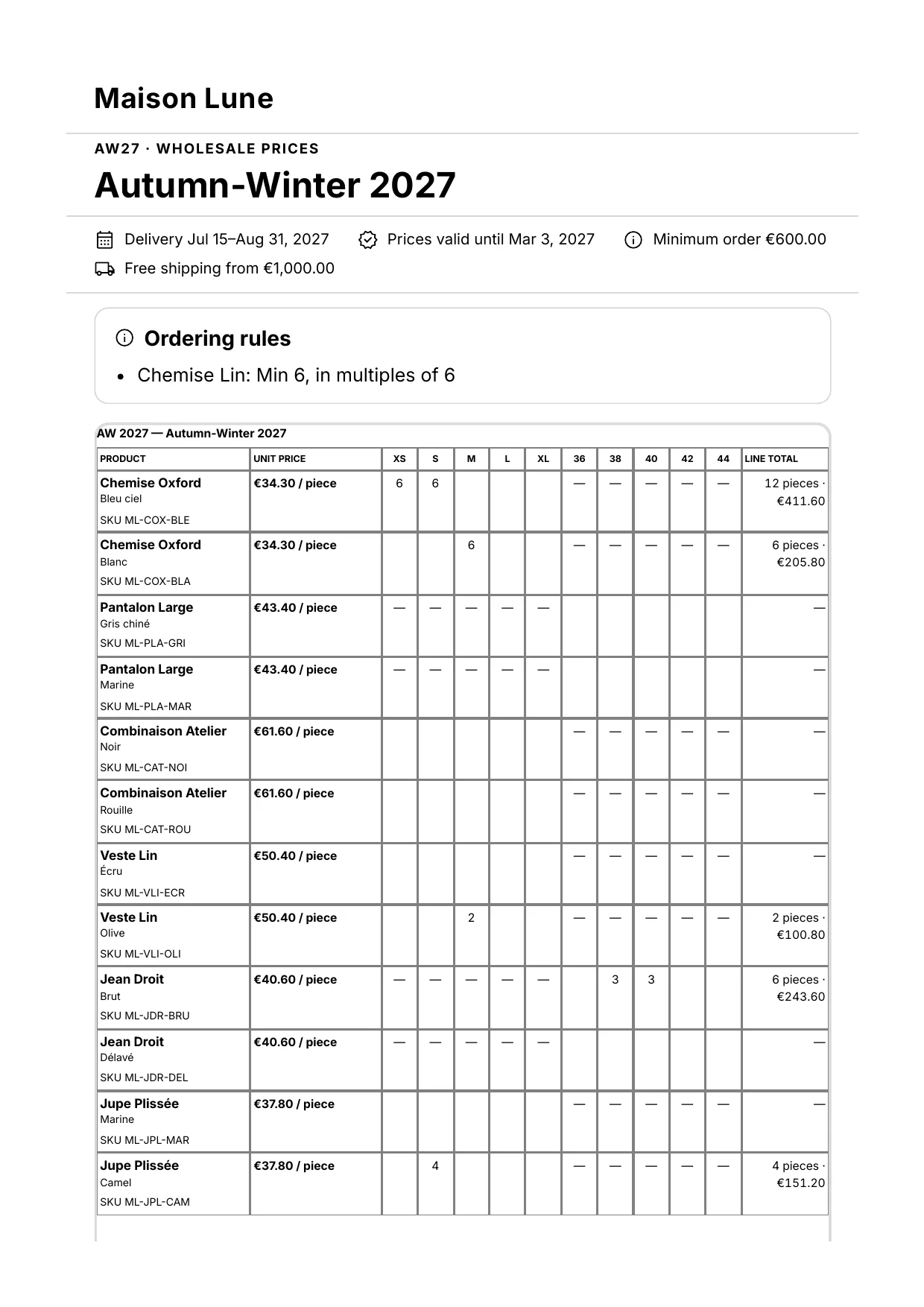
Yes. An online line sheet where the store picks quantities by size and sends them is a line sheet and an order form in one. With Carnet, that page is built from a Shopify collection, shows each stockist their own prices, and prints as an A4 order form for fairs and showrooms.
Read what is a line sheet for the fields to include, or see the wholesale order form.
Frequently asked questions
Do I need a lookbook and a line sheet?
Not always. A lookbook introduces a season; a line sheet is what a store orders from. Many small brands start with the line sheet.
Should a line sheet show retail prices?
It can, if stores ask about their margin. The wholesale price and the terms matter most.